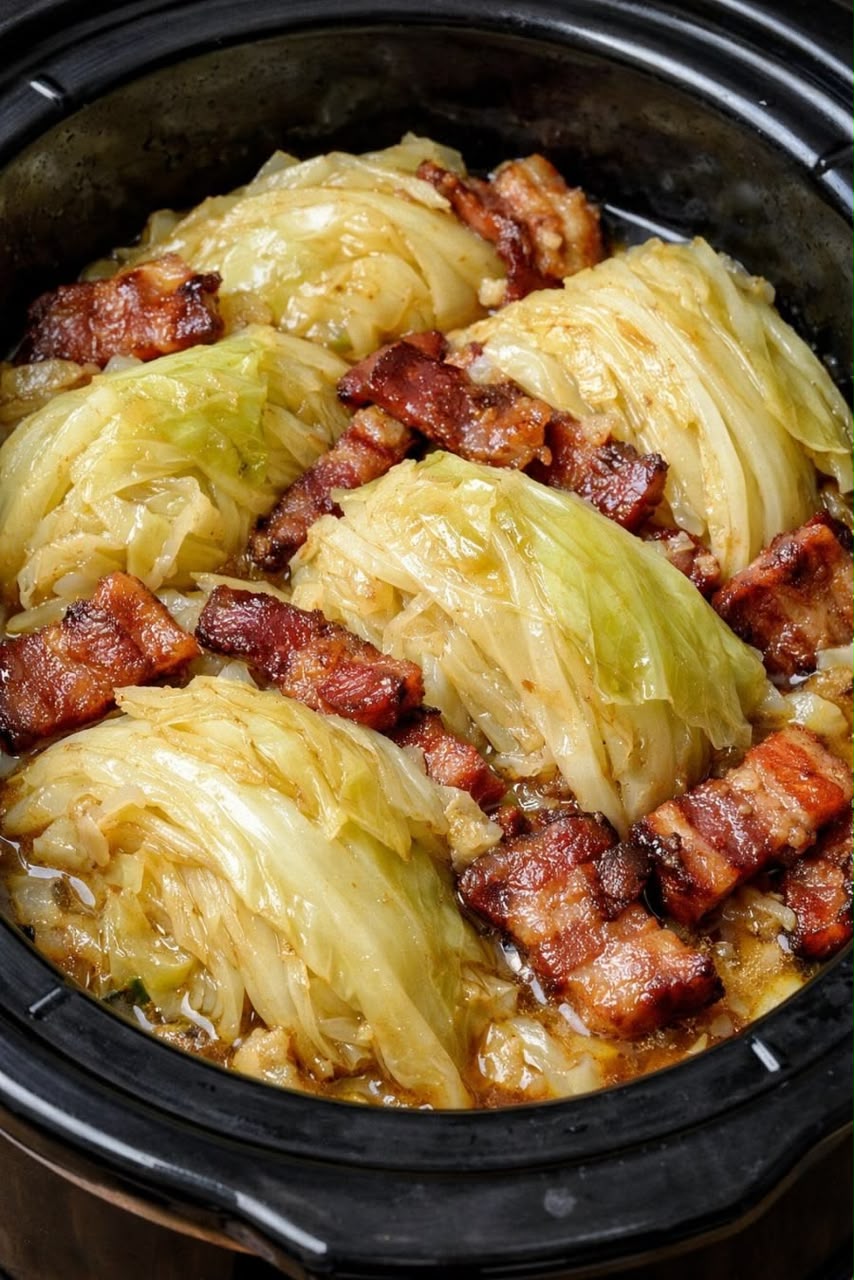
This Slow Cooker Cabbage and Beef recipe is a comforting, flavorful meal made with tender green cabbage, savory beef pieces, onions, garlic, butter, and a delicious seasoned broth. Slowly cooked until everything becomes tender, this easy dish is perfect for busy weeknights, cozy family dinners, or meal prep.
The beef adds rich, savory flavor, while the cabbage absorbs the delicious cooking juices. With simple ingredients and minimal preparation, this slow cooker cabbage recipe is an easy way to create a satisfying homemade meal.
Recipe Overview
| Detail | Information |
| Prep Time | 15 minutes |
| Cook Time | 4–5 hours on LOW or 2–3 hours on HIGH |
| Total Time | Approximately 4 hours 15 minutes–5 hours 15 minutes |
| Servings | 4–6 |
| Cuisine | Comfort Food |
| Course | Main Course |
| Cooking Method | Slow Cooker |
| Difficulty | Easy |
Why You’ll Love This Recipe
Tender, flavorful cabbage: Slow cooking allows the cabbage to soften gradually and absorb the savory broth, garlic, and seasonings.
Rich beef flavor: Beef replaces the usual smoked meat and creates a hearty, satisfying dish.
Easy preparation: A few minutes of chopping and sautéing are all you need before the slow cooker does most of the work.
Perfect for family dinners: This affordable recipe uses everyday ingredients to create a generous meal for the whole family.
Great for meal prep: The leftovers can be refrigerated and reheated for another easy lunch or dinner.
Ingredients
For the Slow Cooker Cabbage and Beef
| Ingredient | Quantity |
| Green cabbage, cut into thick wedges | 1 medium head |
| Beef, cut into bite-sized pieces | 1 lb (450 g) |
| Yellow onion, chopped | 1 medium |
| Garlic cloves, minced | 3 |
| Unsalted butter, melted | 2 tablespoons |
| Beef broth | 1 cup (240 ml) |
| Apple cider vinegar | 1 tablespoon |
| Smoked paprika | 1/2 teaspoon |
| Salt | 1/2 teaspoon, or to taste |
| Freshly cracked black pepper | 1/2 teaspoon |
| Olive oil | 1 tablespoon, if needed |
Best Beef Options
Beef chuck is an excellent choice because it becomes tender and flavorful during slow cooking. Stewing beef is another convenient option.
For a quicker-cooking version, use thinly sliced beef, but reduce the cooking time as needed to prevent it from becoming dry or overcooked.
Step-by-Step Instructions
Step 1: Prepare the Beef
Cut the beef into bite-sized pieces, trimming away any excessively thick pieces of fat or tough connective tissue.
Heat a skillet over medium-high heat and add the olive oil if needed. Working in batches, sear the beef for approximately 2–3 minutes per side until browned on the outside.
The beef does not need to be fully cooked at this stage. Browning helps develop a deeper, richer flavor.
Transfer the beef to a plate.
Step 2: Sauté the Onion and Garlic
Using the same skillet, add the chopped onion and cook for 2–3 minutes until softened.
Add the minced garlic and smoked paprika, stirring for approximately 30 seconds until fragrant.
If the skillet becomes too dry, add a small splash of beef broth and scrape up the browned bits from the bottom. These add extra flavor to the finished dish.
Step 3: Prepare the Cabbage
Remove any damaged outer leaves from the cabbage and rinse it thoroughly.
Cut the cabbage into thick wedges, keeping a small portion of the core attached to each wedge to help hold the leaves together.
Arrange the cabbage wedges in the bottom of the slow cooker.
Step 4: Assemble the Ingredients
Place the browned beef pieces over and between the cabbage wedges.
Add the sautéed onions and garlic, melted butter, beef broth, apple cider vinegar, salt, and black pepper.
Gently turn the cabbage wedges to distribute the seasonings and cooking liquid as evenly as possible.
The liquid does not need to completely cover the cabbage because the vegetables will release additional moisture as they cook.
Step 5: Slow Cook Until Tender
Cover the slow cooker with its lid.
Cook on LOW for approximately 4–5 hours or on HIGH for 2–3 hours, until the cabbage is tender and the beef is fully cooked.
Important: These cooking times are starting estimates for bite-sized beef pieces. Tougher stewing beef may require 6–8 hours on LOW or longer to become fork-tender. Follow your slow cooker’s instructions and check the beef for tenderness and safe doneness before serving.
Avoid lifting the lid frequently, as this releases heat and can extend the cooking time.
Step 6: Check the Seasoning
Once the beef and cabbage are tender, carefully stir the cooking juices around the cabbage wedges.
Taste the broth and adjust the salt and black pepper if necessary. Add a small splash of apple cider vinegar if you prefer a brighter flavor.
If you want a richer broth, remove some of the cooking liquid and simmer it in a saucepan for a few minutes until slightly reduced.
Step 7: Serve and Enjoy
Transfer the cabbage wedges and beef to a large serving platter.
Spoon the flavorful broth over the top and serve immediately while hot.
For extra freshness, garnish with chopped parsley or a little freshly cracked black pepper.
Best Tips for Perfect Slow Cooker Cabbage and Beef
Choose the right cut of beef: Beef chuck or stewing beef is ideal for a tender result when cooked slowly. Leaner cuts may become dry if cooked for too long.
Brown the beef first: Searing adds a deeper savory flavor, although you can skip this step when you need a quicker preparation.
Cut the cabbage into thick wedges: Thick wedges hold their shape better and are less likely to become mushy during cooking.
Do not add too much liquid: Cabbage releases moisture as it cooks, so a moderate amount of broth is usually sufficient.
Keep the lid closed: Opening the slow cooker repeatedly slows the cooking process.
Check tenderness before serving: Beef chuck and stewing beef often need additional time beyond the initial estimate to become fork-tender.
Best Ingredient Options
Beef: Beef chuck, stewing beef, or beef shoulder provides excellent flavor and texture for slow cooking.
Cabbage: Green cabbage is the best traditional choice, but Savoy cabbage can also work. Because its leaves are softer, check it earlier to prevent overcooking.
Broth: Beef broth creates the richest flavor. Chicken broth can be used for a milder taste.
Butter: Unsalted butter adds richness. Olive oil is a suitable alternative if you prefer not to use butter.
Apple cider vinegar: This balances the richness of the beef and enhances the natural sweetness of the cabbage. White wine vinegar can be used instead.
Seasonings: Smoked paprika adds depth, while dried thyme, rosemary, or a bay leaf can provide additional aroma.
Recipe Variations
Garlic Butter Cabbage and Beef: Increase the garlic and add an extra tablespoon of butter during the final 20 minutes of cooking.
Beef and Potato Cabbage Stew: Add chopped potatoes and extra beef broth for a more substantial one-pot meal. Cut the potatoes into even pieces so they cook consistently.
Spicy Slow Cooker Cabbage: Add red pepper flakes or a pinch of cayenne pepper for a little heat.
Tomato Beef and Cabbage: Add a can of diced tomatoes for a richer, slightly tangy broth.
Carrot and Beef Cabbage: Add sliced carrots and celery for extra vegetables and a naturally sweeter flavor.
Herb-Seasoned Beef and Cabbage: Add dried thyme, rosemary, and a bay leaf to create a more aromatic broth.
What to Serve With Slow Cooker Cabbage and Beef
Mashed potatoes: Creamy mashed potatoes pair wonderfully with the tender beef and savory cooking juices.
Steamed rice: Rice absorbs the flavorful broth and makes the meal more filling.
Crusty bread: Serve warm bread alongside the dish to soak up the buttery beef broth.
Roasted carrots: Their natural sweetness complements the cabbage and savory beef.
Fresh green salad: A crisp salad with cucumber and tomatoes adds freshness and balances the warm, hearty flavors.
Make-Ahead Instructions
You can prepare the ingredients in advance to make dinner preparation easier.
Cut the cabbage and beef, chop the onion, and mince the garlic. Store the prepared ingredients separately in covered containers in the refrigerator.
For the best food safety, keep raw beef refrigerated at 40°F (4°C) or below and use it within 1–2 days. Assemble the ingredients in the slow cooker just before cooking rather than leaving raw beef and vegetables together in the switched-off cooker for several hours.
You can also prepare the dish completely ahead of time and reheat portions when needed.
Storage Instructions
Allow leftovers to cool slightly, then transfer them to shallow, airtight containers.
Refrigerate within 2 hours of cooking and store at 40°F (4°C) or below for 3–4 days.
Keep the cabbage, beef, and broth together to help maintain moisture and flavor.
Reheating Instructions
Stovetop: Place the beef, cabbage, and broth in a saucepan. Cover and heat over medium-low heat, stirring gently until thoroughly hot. Add a splash of broth if needed.
Microwave: Place a portion in a microwave-safe container and cover loosely. Heat in short intervals, stirring or rearranging the food to distribute the heat evenly.
Oven: Place the leftovers in an oven-safe dish with a little broth, cover, and heat at 325°F (165°C) until hot throughout.
Reheat leftovers to an internal temperature of 165°F (74°C).
Freezing Instructions
This dish can be frozen, although the cabbage may become softer after thawing.
Allow the cooked food to cool slightly, then divide it into freezer-safe containers with some of the broth.
Freeze for best quality for approximately 2–3 months. Label each container with the preparation date.
Thaw overnight in the refrigerator before reheating, and heat thoroughly before serving.
Common Mistakes to Avoid
Using the wrong cut of beef: Very lean beef may become dry, while tougher cuts need sufficient time to soften. Beef chuck is a reliable choice.
Cutting the cabbage too thinly: Thin pieces can break down before the beef is tender. Use thick wedges for a better texture.
Adding excessive broth: Too much liquid can dilute the flavor. Start with the recommended amount and add more only if necessary.
Skipping the seasoning: Beef and cabbage benefit from adequate salt, pepper, garlic, and acidity. Taste the broth before serving and adjust as needed.
Cooking only by the clock: Slow cookers and beef cuts vary. Check the beef for tenderness rather than relying exclusively on the estimated time.
Leaving leftovers out too long: Refrigerate leftovers promptly to maintain food safety.
Nutrition Estimate
The following values are approximate and depend on the cut of beef, the amount of butter, and the portion size.
| Nutrient | Estimated Amount per Serving |
| Calories | 300–400 kcal |
| Protein | 25–32 g |
| Total Carbohydrates | 15–22 g |
| Dietary Fiber | 5–7 g |
| Total Fat | 14–22 g |
| Saturated Fat | 5–9 g |
| Sugar | 7–10 g |
| Sodium | 450–750 mg |
These figures are estimates and are not laboratory-tested nutritional values. Using lean beef and low-sodium broth can reduce the fat or sodium content.
Frequently Asked Questions
Can I use ground beef instead of beef chunks?
Yes. Brown the ground beef in a skillet, drain excess fat if necessary, and add it to the slow cooker with the cabbage and other ingredients. The texture will be more like a cabbage and beef stew than a dish with large, tender beef pieces.
Can I put raw beef directly into the slow cooker?
Yes, provided you follow your slow cooker’s instructions and use an appropriate cooking time. Browning is optional, but it improves the flavor. Avoid starting with frozen beef, as it may spend too long at an unsafe temperature while thawing.
Why is my beef still tough?
Beef chuck and stewing beef contain connective tissue that needs time to soften. Continue cooking until the beef is fork-tender, adding a little broth if necessary.
Can I cook this recipe on HIGH?
Yes. The suggested starting time is 2–3 hours on HIGH, but tougher beef may need longer. Check the tenderness and doneness before serving.
Can I make this recipe without butter?
Yes. Replace the butter with olive oil or another cooking oil you prefer.
Can I add potatoes to the slow cooker?
Yes. Add evenly sized potato chunks around the beef and cabbage. You may need a little extra broth depending on the amount of vegetables.
Is this recipe suitable for meal prep?
Yes. Divide the cooked beef and cabbage into individual containers with the broth. Refrigerate for up to 3–4 days or freeze for longer storage.
How can I prevent the cabbage from becoming mushy?
Cut the cabbage into thick wedges and avoid cooking it for much longer than necessary. If your beef needs additional time to become tender, consider adding the cabbage later in the cooking process, provided your slow cooker instructions allow it and the beef remains safely cooked.
Final Thoughts
Slow Cooker Cabbage and Beef is a simple, hearty meal that transforms everyday ingredients into a flavorful homemade dinner. Tender cabbage, savory beef, garlic, butter, and seasoned broth come together in a comforting dish that requires very little hands-on effort.
Whether you serve it with mashed potatoes, rice, or crusty bread, this easy slow cooker recipe is a wonderful option for family meals and make-ahead dinners.
Prepare the ingredients, let the slow cooker do the work, and enjoy a warm, satisfying meal with plenty of delicious cooking juices.