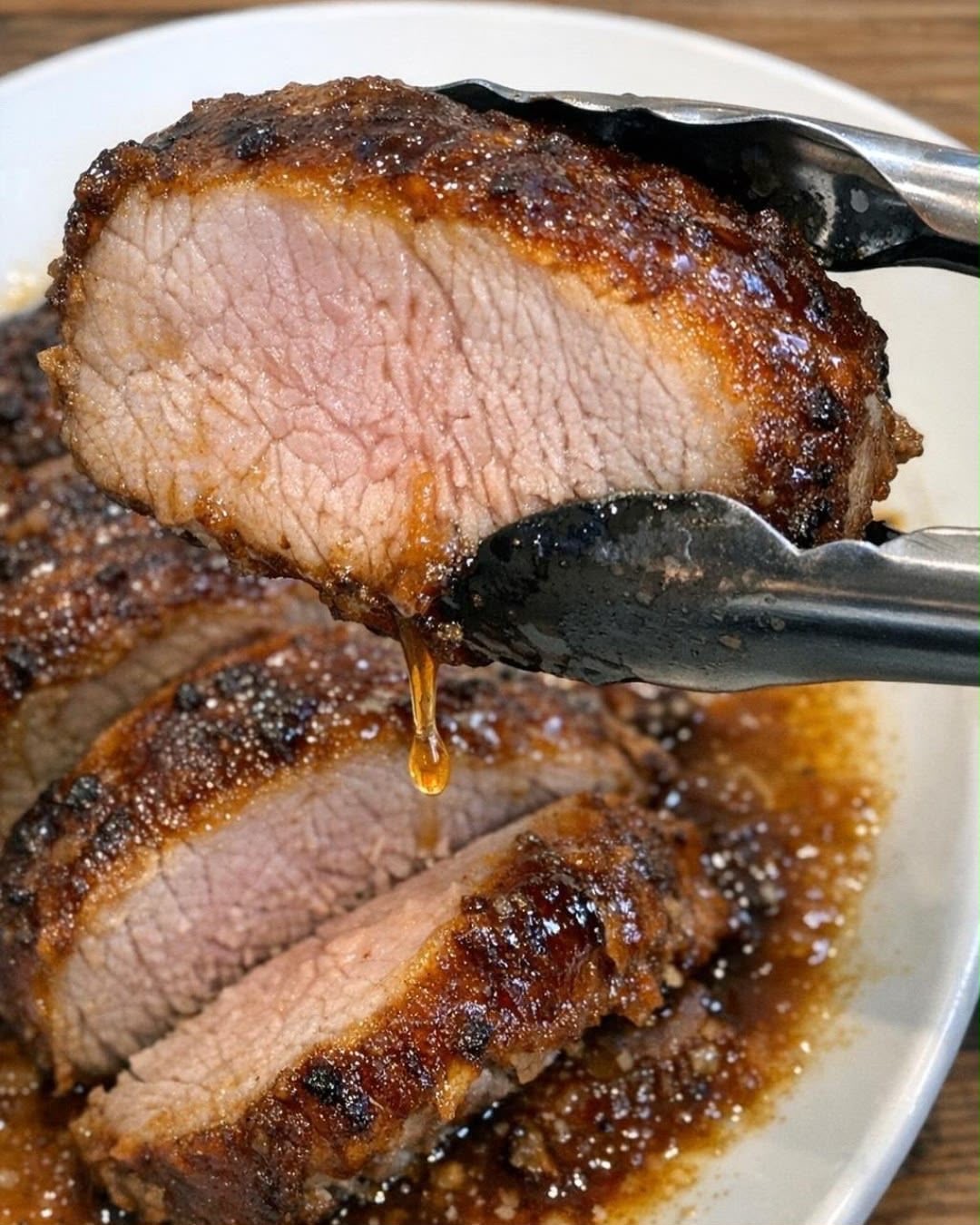
Juicy, tender beef coated in a beautifully caramelized crust and finished with a rich honey-garlic butter sauce! This Garlic Butter Honey-Glazed Beef Tenderloin is an impressive yet surprisingly simple dinner, perfect for family meals, special occasions, or an elegant weekend dinner.
The combination of savory spices, golden honey, fresh garlic, and melted butter creates a glossy glaze that enhances the natural flavor of the beef. Serve it with roasted potatoes, steamed vegetables, or creamy mashed potatoes for a satisfying meal.
Recipe Overview
| Details | Information |
| Prep Time | 15 minutes |
| Cook Time | 20–30 minutes, depending on thickness |
| Resting Time | 5–8 minutes |
| Total Time | Approximately 40–50 minutes |
| Servings | 4–6 |
| Cuisine | American-inspired |
| Cooking Method | Pan-seared and oven-finished if needed |
| Main Ingredient | Beef tenderloin or thick-cut sirloin |
| Flavor Profile | Savory, buttery, garlicky, and sweet |
| Difficulty | Easy to moderate |
Why You’ll Love This Recipe
Tender and juicy beef: With proper searing and resting, the beef develops a flavorful crust while remaining tender and moist inside.
Rich honey-garlic butter sauce: Butter, fresh garlic, honey, soy sauce, and lemon juice combine to create a delicious glaze with a balanced sweet and savory flavor.
Simple ingredients: You can prepare this restaurant-inspired beef dinner using everyday ingredients available at most grocery stores.
Perfect for special occasions: The glossy glaze and golden-brown crust make this dish look impressive without requiring complicated cooking techniques.
Easy to customize: Adjust the sweetness, garlic, and seasonings to suit your taste, or add fresh herbs for extra flavor.
Ingredients
For the Beef
| Ingredient | Quantity |
| Beef tenderloin, beef fillet, or thick-cut sirloin | 2 lb (900 g) |
| Olive oil | 1 tablespoon |
| Brown sugar | 1 tablespoon |
| Garlic powder | 1 teaspoon |
| Onion powder | 1 teaspoon |
| Smoked paprika | 1 teaspoon |
| Coarse salt | 1 teaspoon, or to taste |
| Freshly ground black pepper | 1/2 teaspoon |
For the Honey Garlic Butter Sauce
| Ingredient | Quantity |
| Unsalted butter | 3 tablespoons |
| Fresh garlic, finely minced | 4 cloves |
| Honey | 3 tablespoons |
| Soy sauce | 1 tablespoon |
| Fresh lemon juice or apple cider vinegar | 1 tablespoon |
Optional garnishes: Chopped fresh parsley, fresh thyme, or sliced green onions.
Step-by-Step Instructions
Step 1: Prepare the Beef
Remove the beef from the refrigerator approximately 15–20 minutes before cooking, if convenient. Pat it thoroughly dry with paper towels to help the surface brown properly.
In a small bowl, combine the brown sugar, garlic powder, onion powder, smoked paprika, salt, and black pepper.
Rub the beef with olive oil, then coat all sides evenly with the seasoning mixture. Press the spices gently onto the surface so they adhere.
Step 2: Sear the Beef
Heat a heavy skillet, preferably cast iron, over medium-high heat. Make sure the pan is hot before adding the beef.
Place the beef in the skillet and sear for approximately 3–4 minutes per side, adjusting the time according to its thickness and shape. Turn it carefully to brown the remaining sides.
The goal is to create a rich, caramelized crust. Because the seasoning contains brown sugar, watch the heat closely to prevent the sugar from burning.
Step 3: Finish Cooking in the Oven if Needed
For a thick beef tenderloin piece or roast, preheat the oven to 375°F (190°C).
If your skillet is oven-safe, transfer it directly to the oven. Otherwise, move the beef to a suitable baking dish.
Roast for approximately 10–20 minutes, depending on thickness and your preferred doneness. Begin checking the internal temperature early, since cooking times vary considerably between individual steaks and larger cuts.
For food safety, use a meat thermometer. Whole cuts of beef should reach at least 145°F (63°C), followed by a minimum 3-minute rest, according to USDA guidance. For the most reliable result, insert the thermometer into the thickest part of the meat.
If using individual steaks, you may be able to finish cooking them entirely in the skillet without transferring them to the oven.
Step 4: Prepare the Honey Garlic Butter Sauce
Once the beef is nearly cooked, carefully remove it from the skillet and set it aside. If the pan contains burnt sugar or seasoning, wipe it out before preparing the sauce to avoid a bitter flavor.
Reduce the heat to medium and add the butter. Allow it to melt, then stir in the minced garlic.
Cook for approximately 30–60 seconds, stirring frequently, until fragrant. Avoid browning the garlic too much.
Add the honey, soy sauce, and lemon juice or apple cider vinegar. Stir well and let the mixture bubble gently for 1–3 minutes, until it becomes glossy and slightly thickened.
If the sauce becomes too thick, add a small splash of water and stir until smooth.
Step 5: Glaze the Beef
Return the cooked beef to the skillet over low heat. Spoon the honey-garlic butter sauce over the meat, turning it carefully if appropriate.
Continue glazing for 1–2 minutes, allowing the sauce to coat the surface evenly. Keep the heat low because honey can burn quickly.
If the beef is already at your desired internal temperature, avoid extended cooking in the sauce, which could make it dry.
Step 6: Rest and Slice
Transfer the beef to a clean cutting board and let it rest for 5–8 minutes, or longer for a larger roast as needed.
Resting helps the juices redistribute throughout the meat. Slice against the grain into thick or medium-thick slices.
Arrange the slices on a serving platter and pour the remaining honey-garlic butter sauce over the top. Garnish with fresh parsley or thyme and serve immediately.
Best Tips for Perfect Beef Tenderloin
Dry the meat thoroughly. Excess moisture prevents proper browning and can leave the surface pale rather than caramelized.
Use a hot skillet. A properly heated pan helps develop a flavorful crust. Avoid overcrowding the pan if cooking several steaks.
Monitor the sugar carefully. Brown sugar helps create caramelization, but excessive heat can cause it to burn. Lower the temperature if the crust darkens too quickly.
Use a meat thermometer. Thickness and cut shape affect cooking time, so temperature is more reliable than following a fixed number of minutes.
Don’t overcook the beef. Lean cuts such as tenderloin can become dry when cooked too long.
Add the glaze near the end. Honey contains sugar and can burn during prolonged high-heat cooking. Prepare the sauce separately and apply it toward the end.
Rest before slicing. Allowing the beef to rest helps preserve its juiciness.
Best Ingredient Options
Beef tenderloin: An excellent choice for a tender, elegant result. It is naturally lean and benefits from careful temperature control.
Thick-cut sirloin: A flavorful, practical alternative that works well with the honey-garlic glaze.
Beef fillet steaks: Ideal for individual servings. Adjust cooking times to match their thickness.
Honey: Provides sweetness and helps the sauce develop a glossy finish. Pure maple syrup can be used as an alternative.
Unsalted butter: Gives you greater control over the salt level, particularly because soy sauce is already salty.
Fresh garlic: Offers a stronger, fresher flavor than garlic powder in the sauce.
Low-sodium soy sauce: A good option if you want to reduce the overall saltiness without losing the savory flavor.
Recipe Variations
Spicy Honey Garlic Beef: Add a pinch of red pepper flakes or a little chili powder to introduce gentle heat.
Lemon Herb Beef: Stir fresh thyme or rosemary into the butter sauce and finish with a little extra lemon juice.
Extra-Garlicky Beef: Add one or two additional cloves of garlic if you prefer a stronger garlic flavor.
Maple Butter Beef: Replace the honey with maple syrup for a slightly different sweetness.
Mushroom Garlic Beef: Sauté sliced mushrooms in the skillet before preparing the sauce, then serve them alongside the sliced beef.
Low-Sugar Version: Reduce or omit the brown sugar in the seasoning and use less honey in the sauce. The flavor and caramelization will be slightly different.
What to Serve With Honey-Glazed Beef
Creamy mashed potatoes: Their smooth texture pairs beautifully with the buttery sauce.
Roasted baby potatoes: Crisp edges and soft centers make them a satisfying side dish.
Steamed green beans: Add a fresh, crisp contrast to the richness of the beef.
Roasted carrots: Their natural sweetness complements the honey-garlic glaze.
Steamed broccoli: A simple vegetable side that balances the meal.
Rice or couscous: Both absorb the flavorful sauce and make the dish more filling.
Fresh green salad: A salad with lemon vinaigrette provides a refreshing contrast to the buttery meat.
Make-Ahead Instructions
You can mix the dry seasoning blend up to several days in advance and store it in an airtight container in a cool, dry place.
The garlic may be minced shortly before cooking, and the remaining sauce ingredients can be measured ahead of time.
For the best texture, sear and glaze the beef shortly before serving. If you need to prepare it ahead, cook it safely, refrigerate it promptly, and reheat it gently.
Storage Instructions
Allow leftover beef to cool slightly, then refrigerate it in an airtight container within 2 hours of cooking.
Store the beef and sauce together or separately for up to 3–4 days in the refrigerator.
For best quality, keep the slices coated with a little sauce to help prevent them from drying out.
Reheating Instructions
Stovetop method: Place the sliced beef in a skillet over low heat with a tablespoon or two of water or broth. Add some sauce, cover, and warm gently until heated through.
Oven method: Place the beef in an oven-safe dish with a little sauce or broth. Cover and heat in a 300°F (150°C) oven until warmed through.
Microwave method: Place a portion in a microwave-safe dish, add a little sauce, cover loosely, and heat in short intervals, turning or stirring as appropriate.
For food safety, reheat leftovers to 165°F (74°C). Avoid prolonged heating, which can make lean beef tough and dry.
Freezing Instructions
Cooked beef can be frozen in an airtight, freezer-safe container for approximately 2–3 months for best quality.
Allow the beef to cool, portion it into serving sizes, and include some of the sauce to help protect the meat from drying out.
Thaw overnight in the refrigerator before reheating. The sauce may separate slightly after freezing; stir it gently while warming to bring it back together.
Common Mistakes to Avoid
Cooking wet meat: Moisture on the surface interferes with browning. Always pat the beef dry before seasoning.
Using excessive heat: A very hot skillet can burn the brown sugar and garlic. Adjust the heat as needed throughout cooking.
Guessing the internal temperature: A thick roast and a thin steak require different cooking times. Check the center with a meat thermometer.
Adding garlic too early: Garlic can become bitter if cooked for too long or at excessive heat. Add it to the butter shortly before the other sauce ingredients.
Making the sauce too sweet: Honey and brown sugar both contribute sweetness. Taste the sauce and adjust the lemon juice or soy sauce to balance it.
Skipping the resting period: Cutting the beef immediately can cause more juices to escape onto the cutting board.
Overcooking during glazing: The sauce should coat the beef, not cook it for an extended period after it has reached the desired temperature.
Nutrition Estimate
The following values are approximate estimates per serving, assuming 6 servings and including the seasoning and sauce. Actual values depend on the beef cut, trimming, and how much sauce is consumed.
| Nutrient | Approximate Amount |
| Calories | 430–500 kcal |
| Protein | 38–45 g |
| Total Fat | 23–30 g |
| Saturated Fat | 10–13 g |
| Carbohydrates | 10–14 g |
| Sugars | 8–12 g |
| Sodium | 500–750 mg |
These figures are estimates, not laboratory-tested nutritional values. The sodium level may vary significantly depending on the soy sauce and salt used.
Frequently Asked Questions
Can I make this recipe without an oven?
Yes. Individual steaks can be cooked entirely in a skillet, turning as needed until they reach the desired internal temperature. Thicker cuts may require lower heat and a covered skillet to cook through evenly.
What is the best cut of beef for this recipe?
Beef tenderloin is especially tender, while thick-cut sirloin offers a beefier flavor. Choose a cut of relatively even thickness so it cooks more consistently.
Can I use maple syrup instead of honey?
Yes. Maple syrup works well as a substitute and creates a slightly different but delicious glaze.
How do I know when the beef is done?
Use a digital meat thermometer inserted into the thickest part. Whole cuts of beef should reach at least 145°F (63°C), followed by a minimum 3-minute rest for food safety.
Why is my honey garlic sauce too thin?
It may need a little more simmering. Let it bubble gently for another minute or two, stirring frequently. Remember that it will also thicken slightly as it cools.
Can I prepare the sauce in advance?
Yes. You can prepare it ahead and refrigerate it in a covered container. Reheat gently in a skillet, stirring until smooth. If it becomes too thick, add a small amount of water.
Can I use garlic powder instead of fresh garlic?
Fresh garlic gives the sauce a more pronounced flavor, but garlic powder can work in a pinch. Start with approximately 1/2 teaspoon and adjust to taste.
Is this recipe suitable for meal prep?
Yes. Divide the cooked beef into individual portions with a little sauce and refrigerate promptly. Reheat gently to help preserve its texture.
What can I do if the sauce tastes too sweet?
Add a little extra lemon juice or a small amount of soy sauce. Make small adjustments and taste as you go to avoid making the sauce too acidic or salty.
Can I make this recipe dairy-free?
You can replace the butter with a suitable dairy-free butter alternative or olive oil. The sauce will have a slightly different flavor and texture.
Final Thoughts
Garlic Butter Honey-Glazed Beef Tenderloin combines tender beef, aromatic garlic, rich butter, and a sweet-savory glaze in one impressive dish. With a well-seared crust, careful temperature control, and a short resting period, you can create a flavorful dinner without complicated techniques.
Serve it with your favorite potatoes and vegetables, drizzle the remaining sauce over the slices, and enjoy a restaurant-inspired meal at home.
⚠️ This recipe may not be suitable for everyone. If you have dietary restrictions, food allergies, or a medical condition requiring a specific diet, consult a qualified healthcare professional for personalized advice.